
Lacey Game’s Analysis Part 1

Ghosttundra’s Lacey Games is a digital horror about the roles and complacency that society plays in misogyny. The online horror supposes that being a ‘real girl' is constructed through violence of the patriarchy, and is the only method of defining womanhood. This is accomplished through the initial content of the YouTube videos, the role of player interactivity in the demo, and the overall role of the characters both in the lacey universe and the outside story with the creator, co-creator and investigator. This will be broken up into 3 parts in order to keep the size from being too overwhelming for readers.
The Web series’ initial set up follows nostalgic exploration of a website, and the flash games called, Real Girl Games. This harkens many to the early internet in which many children's websites (more specifically websites catering to young girls) serve as a nostalgic snare. Those who remember those sites most likely remember the range of genres of flash games. For girls, these games revolve around exploring caretaker roles, aesthetic roles, and relational roles commonly related to women. Notably these games range from fairly mundane (think of doll dress up games) to grotesque simulacras (e.g those dental hygienist games with Disney princesses). These, in turn, encapsulate the general ideals of femininity during the early to late 2000s. The sites are web developers' best guesses as to what little girls do and what they aspire to be in the future and how to make as much ad revenue from that as possible. From the need to slap Barbie, Elsa, and other pop culture icons of girlhood in so girls can ‘know’ they are not playing a boys game of dentist surgery (not even mentioning the the pained expressions many game thumbnails have). To basic color palettes with women to slather on like acrylic paint pretending to be makeup; all in the hope that a kid misclicks on whatever banner ad that has been crowded on the sides. Because that is the primary goal of these sites, to make money (or advertise in hopes of making future profit) on young girls.

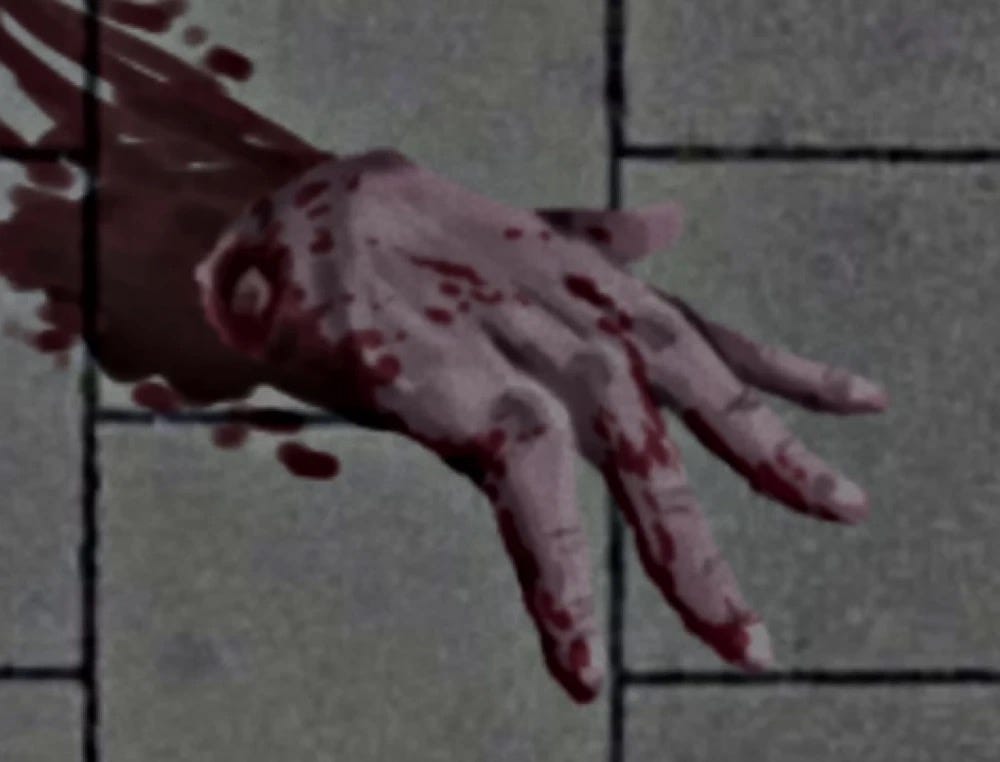
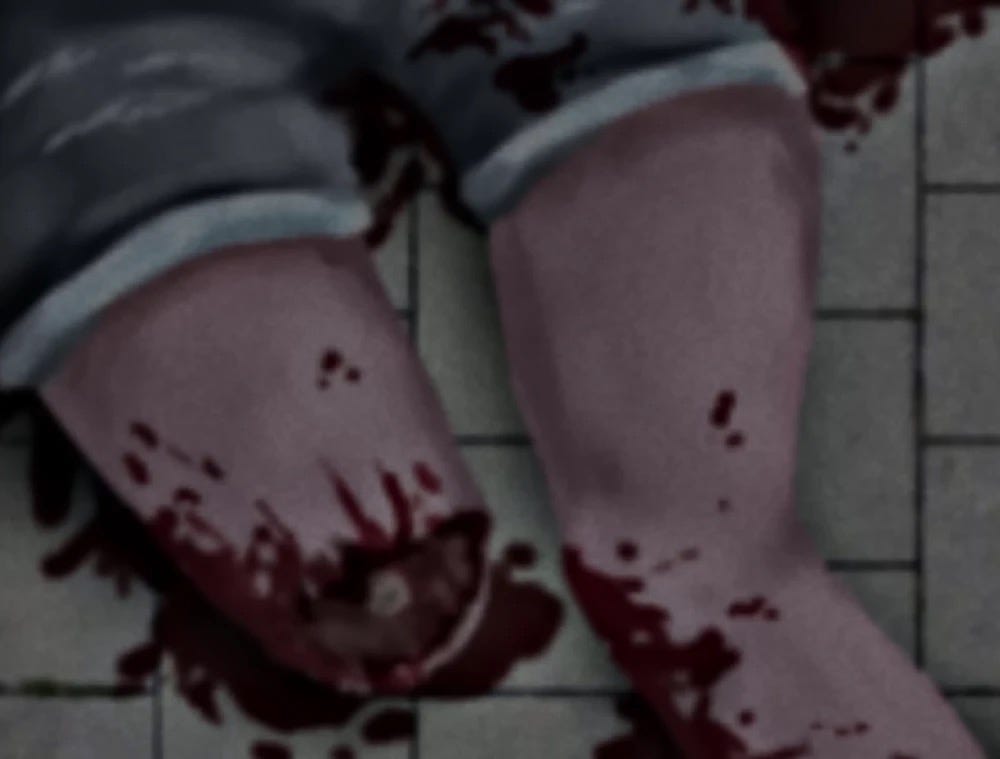
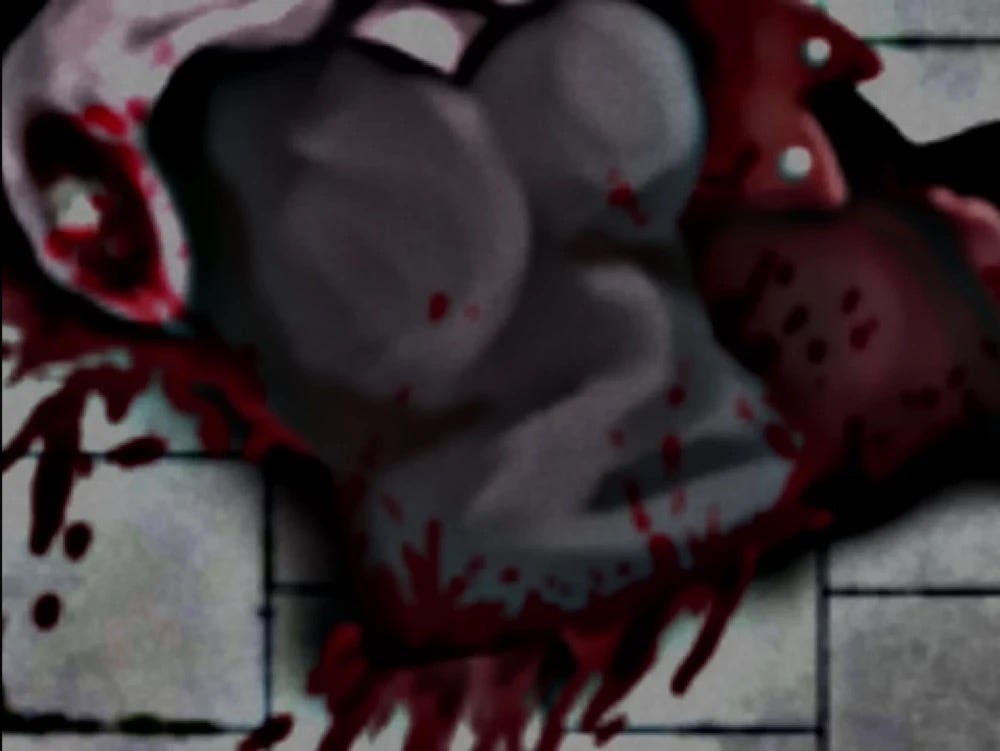
Lacey Games takes this brief web phenomenon and utilizes it for horror. The current video/demo catalogue intertwines the vapid aesthetic/caretaker games with overt patriarchal violence. Starting with the pilot video ‘Laceys Wardrobe- lost 2006 flash game’ depicts the titular Lacey acting as a dress up doll for different events, all while a cannibalistic stalker harasses and eventually murders her. Lacey is helpless. Flash games in this genre places, typically, female characters being literally objectified into a doll for clothing keeping them frozen in place while they are enacted upon by the player to make either cohesive outfits or abominations to the natural eye. Ghosttundra utilizes the genre by constructing a scenario in which Lacey cannot win. She cannot move and act independently because that's not within the parameters of the game, she can only beg for the player (the authority and controller of her autonomy) to help her. Instead, they send her to her murder. The player is rewarded with both a win state and up close shots of her dismemberment which are depicted in a titillating manner. These shots do not show on her face, instead focusing on the most commonly sexualized parts of the body: the chest and waist, the thighs, and the hands. Its final shots of Lacey are in fact the most objectified. She loses her identity and becomes nothing more than the sexualized body parts that are consumed out of ‘love’.Through this lens the critique is clear: dress up games define the role of a woman to be the most aesthetically pleasing while taking away autonomy in favor of the other’s opinion and violence. The trend continues with the subsequent videos; each exploring an aspect of misogyny and womanhood.
The ‘disturbing secret ending found in 2007 flash game- Lacey's diner’ gives Lacey the illusion of an active role, and in turn explores undervalued nature traditionally gendered occupations. She serves as the owner of a restaurant and acts as the head chef, yet she's just as immobile as before, leaving her fate to outside hands while she gives orders. The video illustrates that following her directions results in a normal gameplay loop and reward. This is just illustrating to the audience that it is a perfectly normal girl game, unless the player decides to run down the timer. The uploader fails to follow instructions and the façade crumbles. After the two minute timer fails a jump scare depicting Lacey with my white eyes in an act of self harm while degrading herself. The audience becomes privy to an intimate part of Lacey’s existence in the context of the game. She cannot survive without the dinner mentally and financially. Everything rides on putting the food out on time. The game uses Lacey’s mental distress as a warning system. The next day players can course correct and experience the intended ending. Her acts of self harm are put on display to disturb the player and by extension the viewing audience. The format of YouTube even encourages more gawking. Anyone can pause and read the jumpscare, take apart the pictures.
Of course, when the player inevitably repeats this failure she snaps. Transforming into a grotesque version of herself along with the world around her. These moments are arguably her most autonomous and the most degrading. She selects the most vulnerable and lowest parts of her past as ingredients. She's able to get revenge against the diner patrons and the player by subjecting them to the same torture before killing herself due to the rebuttal by the superstructures in place. Yet this finalizes her loss of autonomy and self. It boils her down to her failures and her harms and ensures that the suicide is not an act of autonomy, but a continuation of the violence spectacle. This circularizes violence on women, the way it builds off of the past, the build up, and the lash out. And of course when the lash out is seen, punishment is given resulting in any further acts to be internalized and self terminating. It also serves as a scathing critique on unseen labor of women. Cooking, an intensive process, is boiled down to basic mouse movements that only jumble ingredients into one bowl before suddenly a finished product is created and served. It obfuscates the act of creating and cooking only showing highlights, setting up a false reality that demeans and oversimplifies the process. The alternative route shows the consequences of this. People get impatient and leave when the meal isn't done fast enough, this feedback loop repeats sealing in the idea that this labor isn't appreciated enough for people to wait. On top of that the YouTube format allows viewers to become voyeurs Carefully scrape through each frame to read out every quick frame flash. Read the text to get more intimate with each ingredient. Yet, this is not the only function. Tundra also wishes to create catharsis and empathy with Lacey and her creator Rosario. Both to be discussed in the subsequent parts. She wants these moments to feel raw and for everyone to take them in and think about it.
The third video, ‘lacey’s petshop- 2007 flash game’ gives us more narrative context for the frame surrounding the videos. The video descriptions up to this entry fails to give a timeframe for charchar887’s, and by extension the sites hay days, childhood. 2007 is considered part of the golden era of flash games (Reeves ‘How Flash Games Changed Video Game History’ 2018). By granting context clues one can infer the reach disturbing material had, and the staying power. Viewers also get insight into how the outside world reacts to Lacey’s Games. Forum threads, angry comments by parents, and a vehement distancing by the website's co-creator. Rocio's escalation of who is affected by the superstructure. It is not just the woman, but the vulnerable too. Pets are also subject to patriarchal control and violence. They are forced to conform to harmful beauty standards (e.g the hamster and the tortoise) or be made into utterly dependent beings (the rabbit). Then the Bad Dog is clicked. All pretenses drop, and this becomes an exploration of Rocio’s past and trauma. It also changes genres from a pet grooming game to a point and click horror. In turn extrapolates into a query as to why she creates these games. The click adventure explores where her understanding of patriarchy and violence starts, where most understanding of patriarchal violence starts: at home. Positing that these are real girl games. Real girl games, and by extension real girls are constructed through the continual victimizations of the powerless into autonomousless roles meant for outsiders pleasure and their judgement. Players enter this role by controlling Lacey through the segment, through her eyes. This gives her co-autonomy with the player. She gets to describe objects and reveal information, and she gets to traverse the house. She also gets to kill Uncle and hide his body under the bed. The change in genres must be noted too. Point and Click Adventures are gender neutral, relying on problem solving skills and reading to fully experience and enjoy the product. Tundra masterfully sets up that seeing the truth posited by the series allows for evolution and changes to occur.
The followup ‘the disturbing rabbithole of lacey games.com’ compliments this. Jay has the only proactive game role as of writing. The two games we see of hers on the web page are Jay’s Skating Game and Jay’s Hip Hop Class. These games do not center on the stereotypical ‘feminine’ flash games, instead they hint at a driving game, or skating in Jay’s case, and a rhythm game. The game itself is glitchy, implied to be hard either through lag (as inference by the jank loading symbol) or through poor player skill. In turn this inferences that either Rosario (presumed head programer) does not want the average player to see her die, but rather more skilled older players to witness this (aka parents). Alternatively the stress that the Jay controversy induced was enough to break Rosario. She programmed a sloppy game to rid the site of Jay as fast as possible. Either way when it is completed the game announces that “You killed Jay” (Ghosttundra 9:11) accompanying a shot visually reminiscent of Victim #1 from the MARIO creepypasta.

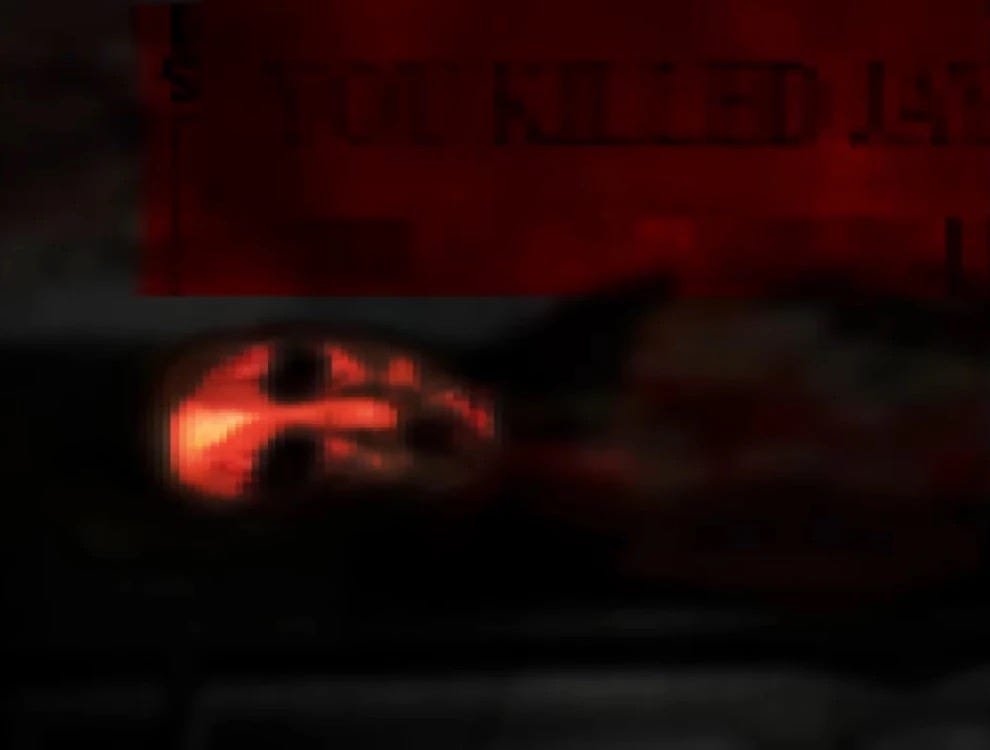
These similarities are intentional since both depict females post brutal murder, are hard to access (the original creepypasta has this image hidden having the creepypasta reader translate it back into the png file), and are meant to scar the player while implying that they too play a role in the death. Afterwards, the video distorts bringing up a third window of a mass while screenshots of emails and text flashes on screen. These emails reveal that parents hated Jay. May interpreted her as unsafe for children either for religious reasons, or because misinterpreted her as transgender and decided to send slurs. Implicitly this is the true cause of Jay's death, a vicious act of compliance and not because Rosario is unstable. She's killed for her masculinity. She failed her role to prime girls for femininity in the eyes of the wider world, and dared to push the boundaries slightly. Jay is not visually depicted as intensely masculine. She's mimics the early skater girl styles of the 2000s, yet this is not enough for patriarchy. So she is forced into the cycle of violence along with Lacey.
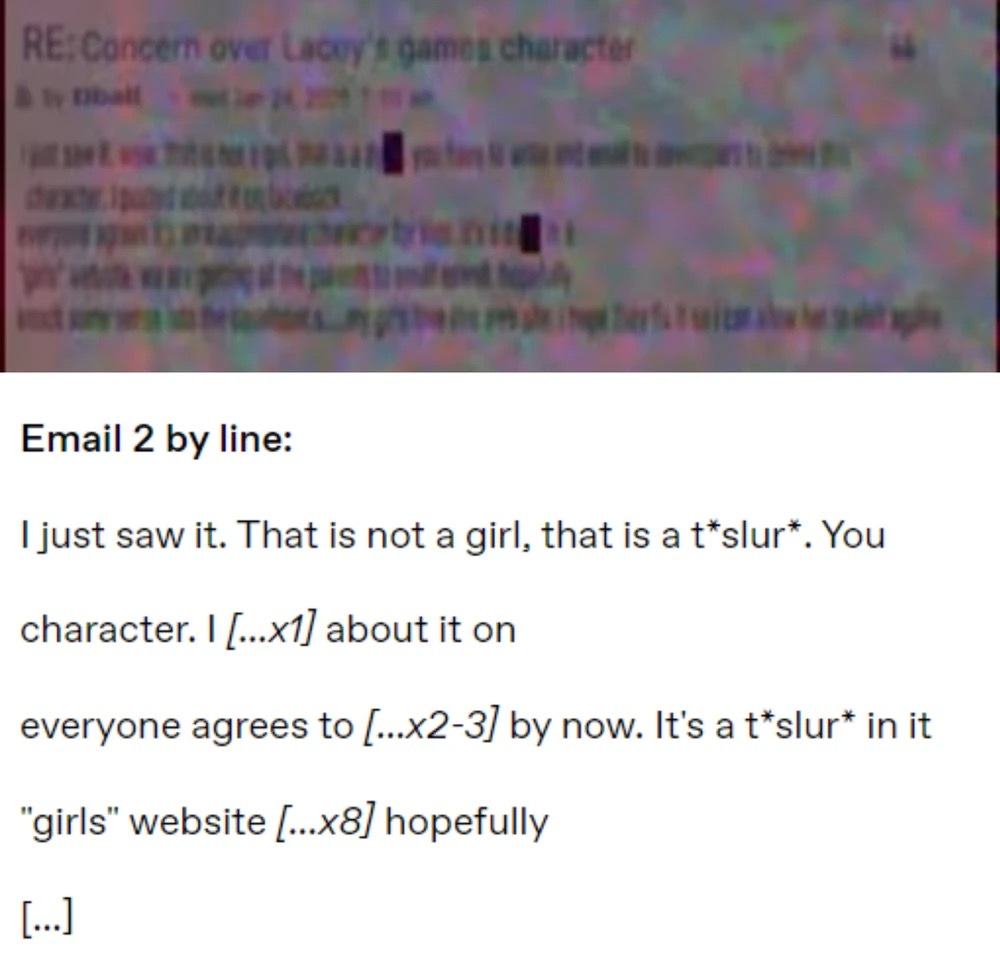
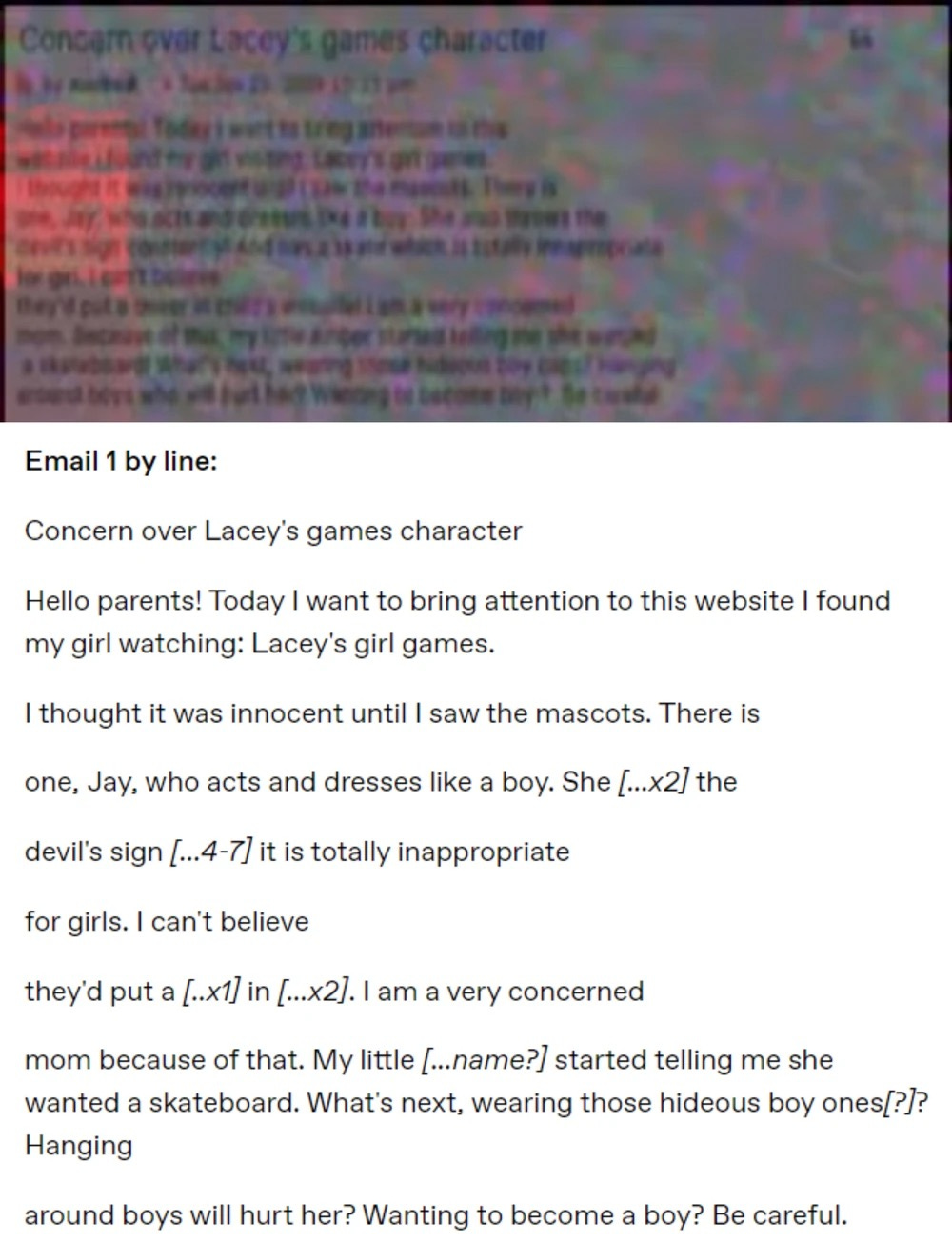
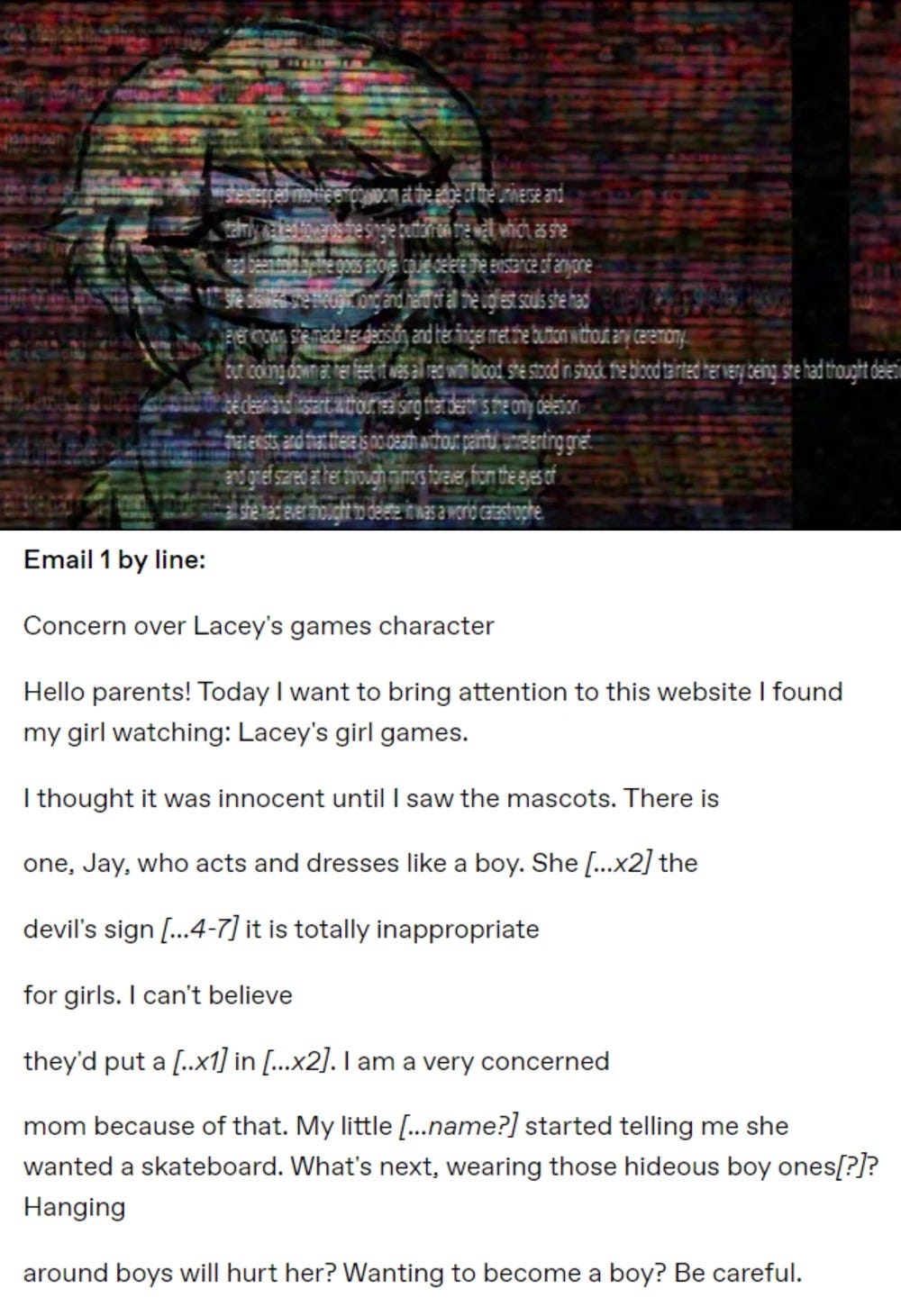
Gendered violence extends beyond her death. Immediately following these screenshots Lacey's Makeup Parlor starts playing. It cranks up the stereotypical femininity having the player smear makeup on various women. Yet the game starts to rot. One woman melts, her cheek sagging down with a big ‘Fix her’ button right next. Bugs start to crawl out. Finally Jay appears, rotting. Lacey, after a mental breakdown in the bathroom of the mortuary, then takes away her agency after death by applying makeup thus feminizing her. She strips her of herself and forces her into the role demanded of her. All vestiges of her autonomy and masculine leanings are stripped away. Directly mirroring real life. Death places the person in the final subjection position. They can be dressed however and buried however and their autonomy is discarded by those who cared little for it in the first place. This creates a false feedback loop that's shown with Lacey. Because Jay’s death is a direct result in her perceived masculine nature, Lacey can only presume forcing femininity on both herself and the decaying corpse then harm cannot occur.
The YouTube video genre inherently grants the viewers a sense of disconnectedness from the work in question. When someone watches a video, they can suspend their disbelief and connectedness in the work in question. They can also interact and digest concepts and ideas through video formats. Lacey's Games is a prime example. Through these short series of videos misogyny can be deconstructed and looked at through the contemporary lens. It allows viewers to suspend belief about the mode of the story existing through the meta narrative. This means one does not have to pre establish the existence of a real girl games site and flash games to boot. Instead, by framing a character as exploring dark secrets of a flash game site the creator is allowed to get into the nitty gritty. One can see the evolution of the idea and how the metanarrative works into the videos and enriches it. In turn this allows for the larger themes to have breathing room. This is why one is able to interpret the ‘games’ themselves and the feminist analytics without being bogged down with the ‘how am I looking at this?’ that comes with more ergodic works. Of course taking the extra steps allows for more exploration; allowing for viewers to interrogate their personal roles in depth as explored in part two.
Works Cited
“Disturbing secret ending found in 2007 flash game-Lacey's diner" YouTube, Uploaded by Ghosttundra, Nov 1st 2022, https://youtu.be/ANnMryfbx2M?si=_tsgHGhUQqUiLZtb
"Lacey's petshop- 2007 flash game" YouTube, Uploaded by Ghosttundra, Jul 21st 2023. https://youtu.be/D5kymMEvReE?si=Du-xz6OWSNTYuCo7.
"Lacey's wardrobe- lost 2006 flash game" YouTube, Uploaded by Ghosttundra, Oct 11th 2022, https://youtu.be/rpmCU6h0JSQ?si=2PNfF-8e4DLF9wt2
Reeves, Ben. "How Flash Games Changed Video Games" Game Informer, Dec 22nd 2018, https://gameinformer.com/2018/12/22/how-flash-games-changed-video-game-history Accessed Mar 19th 2026.
“Transcriptions” Fandom, Dec 18th 2024, https://lacey-games-series.fandom.com/wiki/Transcriptions. Accessed Mar 19th 2026.
"The Disturbing Rabbit Hole of laceygames.com" YouTube, Uploaded by Ghosttundra, Apr 19th 2024, https://youtu.be/0U2PDEOuz7M?si=EcDeOUrNKMuCrDhB